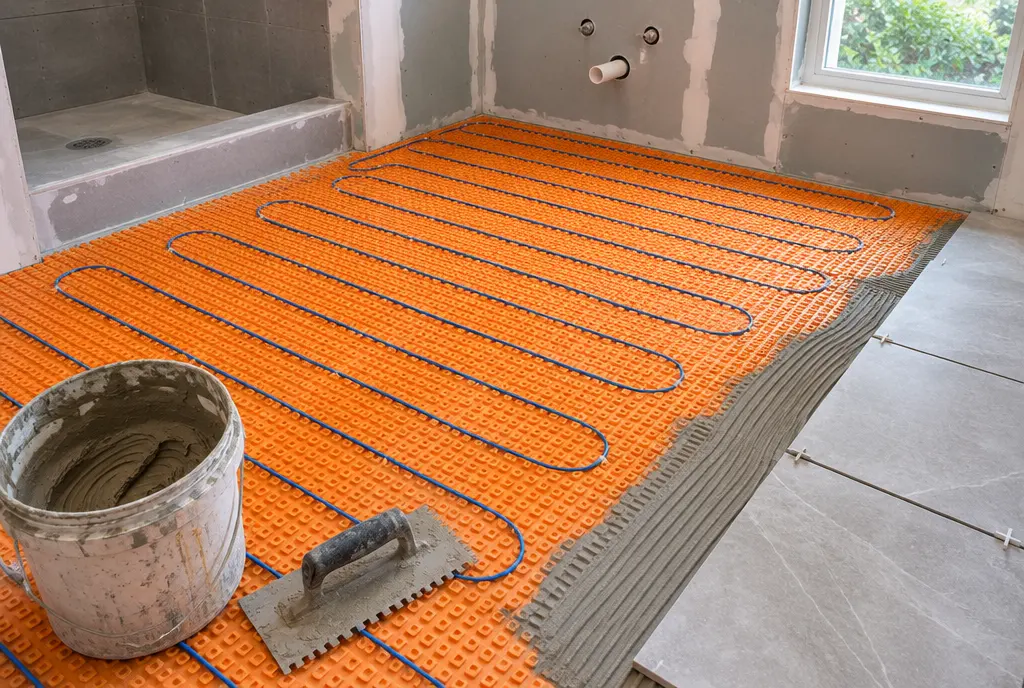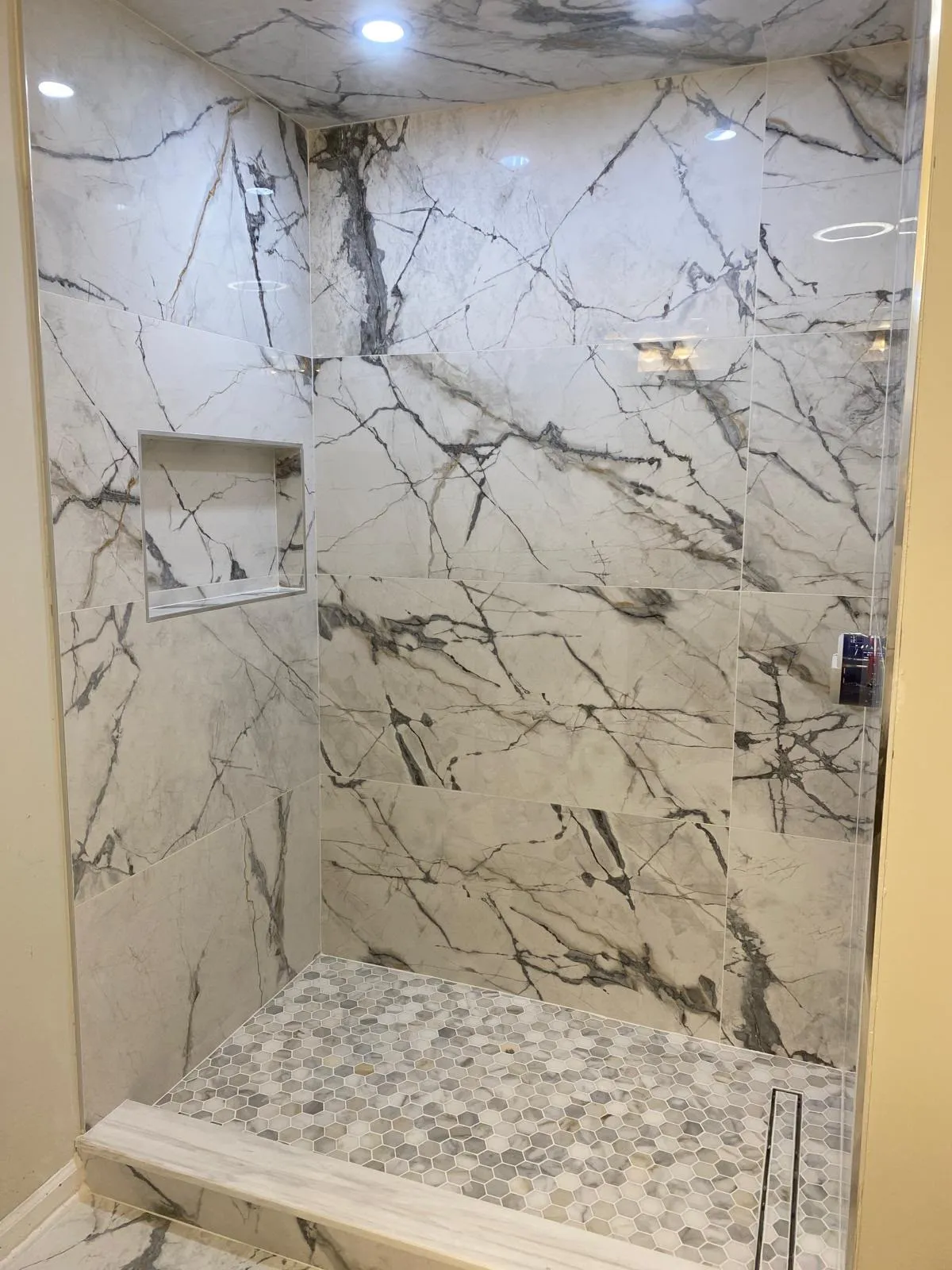
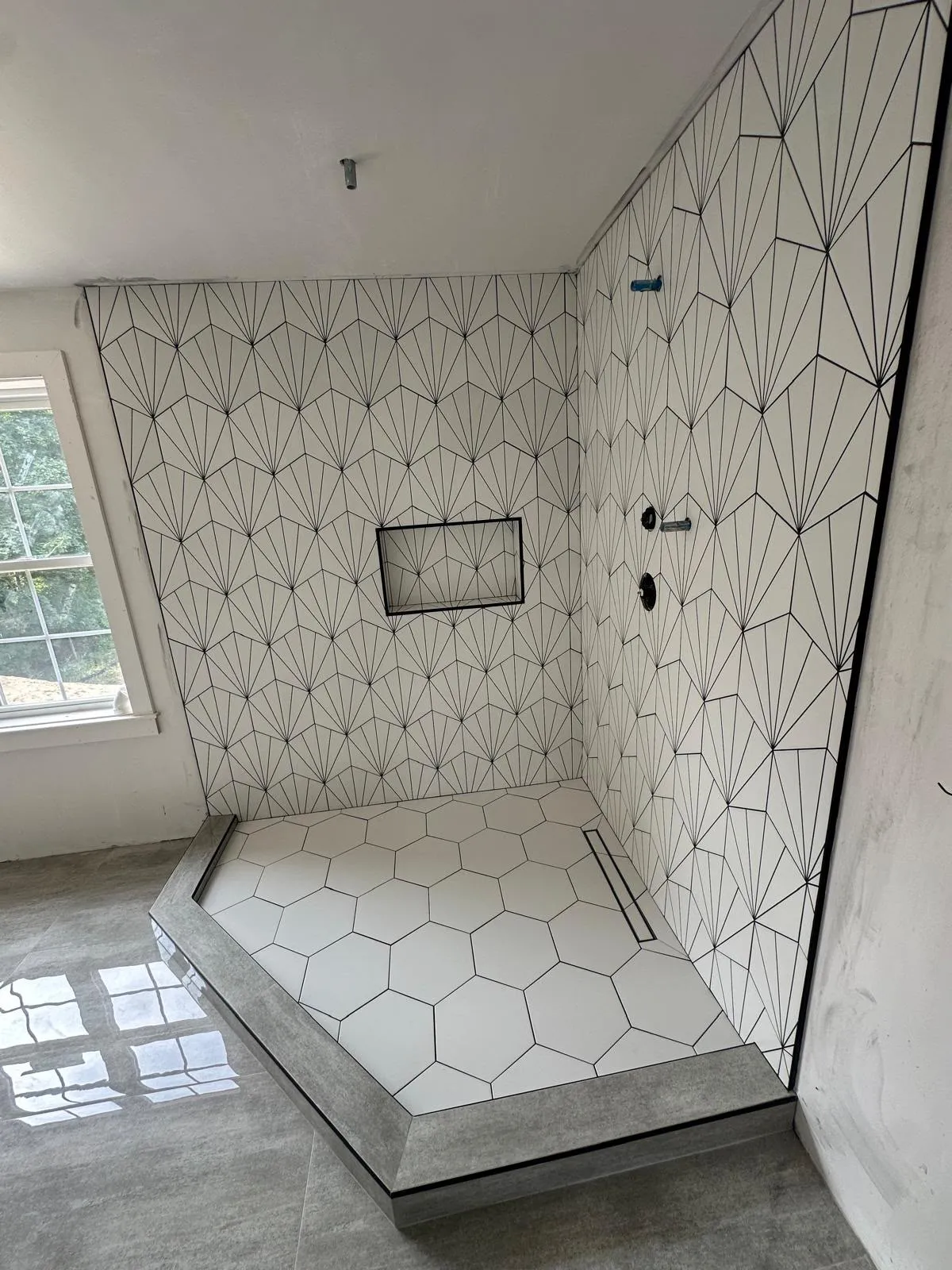
Tile keeps getting bigger. Twelve by twenty-four is now the standard size, and 24 by 48 is common. Large tile looks clean and has fewer grout lines to maintain. It is also much less forgiving of the floor it goes on, and floors in older New England houses are rarely flat.
Why big tile is harder
A small tile follows the contours of a floor. A two-foot tile cannot. Lay it across a dip and the middle is hollow underneath. Lay it across a hump and it rocks, and the edge sits higher than its neighbor. That raised edge is called lippage, and it is what you feel under your foot and see when light comes across the floor from a window.
Hollow spots matter too. A tile that is not fully supported will crack when something heavy lands on it.
How flat is flat enough
The industry standard for tile with any side 15 inches or longer is a surface that varies no more than an eighth of an inch over ten feet. For comparison, a typical wood-framed floor in a house built before 1960 can be off by half an inch or more across a room. Mill-era homes in places like Hopedale, MA and triple-deckers in Worcester, MA are often further out than that.
Flat is not the same as level. A floor can slope gently toward one wall and still take tile well, as long as the surface is a consistent plane.
Stiffness comes before flatness
Before flattening anything, we check how much the floor moves. Tile and grout do not bend. If the joists flex when someone walks across the room, the tile above them will eventually crack along the grout lines.
What we look at:
- Joist size, spacing and span. Long spans of small joists are common in older homes.
- Subfloor thickness. Tile needs a solid base, usually a second layer of plywood over old plank subfloor.
- Soft spots. Around toilets, tubs and exterior doors, old water damage is common.
Fixes range from adding blocking between joists, to sistering joists from the basement, to adding a layer of plywood. Natural stone needs a floor roughly twice as stiff as porcelain does.
Getting the surface flat
Once the floor is stiff, there are a few ways to flatten it:
- Self-leveling underlayment. A pourable cement product that finds its own level. Good for larger corrections over a whole room.
- Patching compound. Troweled into low spots where the correction is local.
- Grinding. For high spots on concrete slabs.
Thinset mortar is not for leveling. Building it up thick to hide a dip leads to shrinkage and hollow tiles.
Details that matter with large tile
- Offset. Large rectangular tiles are slightly crowned in the middle. Setting them in a brick pattern at half offset puts the high center of one tile next to the low end of another. A one-third offset avoids this.
- Mortar. Large tile needs a mortar made for it, applied to both the floor and the back of the tile so coverage is close to complete.
- Leveling clips. These hold neighboring edges even while the mortar cures. They help with lippage but do not replace a flat floor.
- Movement joints. A gap at the walls, filled with flexible sealant under the baseboard, lets the floor move with the seasons.
What this means for your estimate
If you get two prices for the same tile floor and one is much lower, look at the prep. An estimate that lists subfloor work, flattening and an underlayment or membrane is describing a different job from one that says "install tile." In an older home, the prep is often a third or more of the labor, and it is what decides whether the floor is still crack-free in ten years.
We can usually tell what a floor needs with a straightedge and a look at the joists from the basement, so it is something to settle at the estimate, not after the old floor comes up.
Need this done at your house?
MA Tile Inc handles tile installation across Massachusetts, Rhode Island and New Hampshire. Call (508) 239-2004 or request an estimate.